Knowing What Game Theory Actually Means
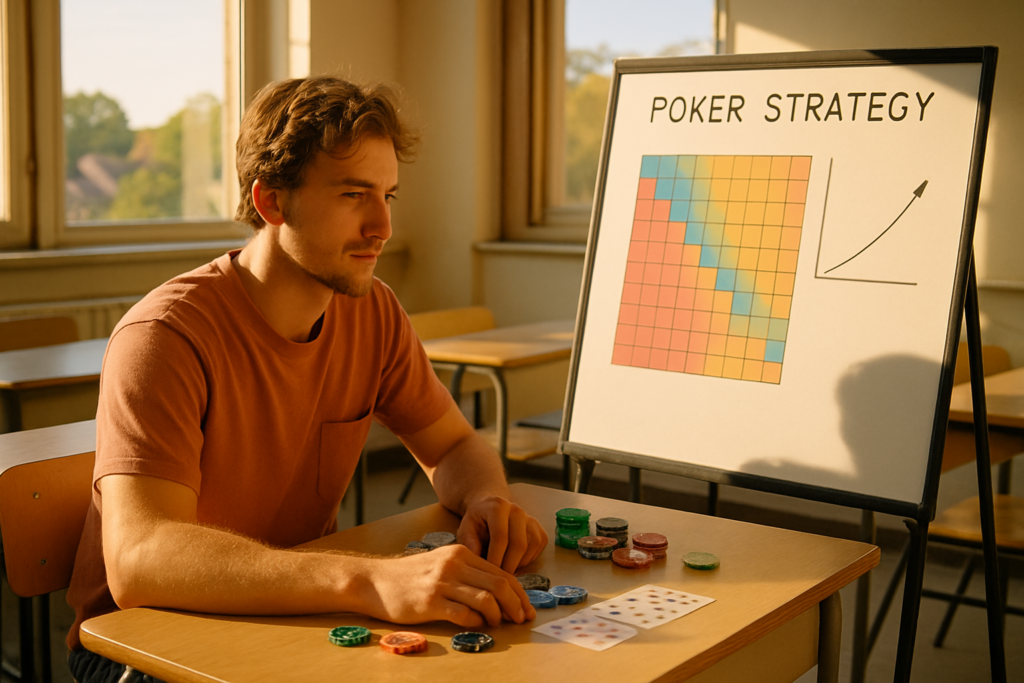
GTO short for Game Theory Optimal isn’t some gimmick or elite only concept. It’s a baseline. In poker, GTO represents a strategy that can’t be exploited in the long run. You’re not trying to win every hand with it. You’re trying to be unexploitable, forcing opponents to beat you straight up. It’s the blueprint for not bleeding chips to players who adjust better or faster.
Balance is the core of it. That means mixing your plays just enough so no opponent can say, “He always bluffs here” or “She only raises big when she’s strong.” You’ll still value bet. You’ll still bluff. But you’ll do it at the right frequencies. The goal isn’t robotic sameness it’s unpredictability with reason.
Now, here’s where it gets real at mid stakes: full GTO isn’t always possible. Most players at $1/$2 or $2/$5 buy in levels don’t play balanced poker. They’re too tight, too loose, too reactive. That’s where exploitative play enters. If you spot someone who always folds to aggression, GTO says to bluff only some of the time. Exploitative play says just bluff. And, guess what? That can be the better money maker.
The trick is threading the needle. Lean on GTO as your base, and deviate when your opponent makes it easy. That way, you’re tough to beat when the table sharpens up, but you’re still scooping up edge when it’s soft. Learn the rules then learn when to break them.
Key Concepts That Translate to Wins
Understanding the mechanics behind profitable play is essential if you want to thrive at mid stakes tables. While raw aggression or intuition may work at lower levels, consistent wins here come from disciplined application of key game theory concepts.
Thinking in Mixed Strategies
One of the cornerstones of Game Theory Optimal (GTO) play is unpredictability. If your opponents can always put you on a hand or know exactly when you’re bluffing you’re leaving value on the table.
To avoid this:
Use a mix of plays from the same spot (e.g., sometimes c bet, sometimes check back with similar hands)
Assign percentages to decisions during study time, then practice executing them in game
Don’t over adjust based on emotion or a few hands randomness protects your range integrity
Frequency Based vs. Hand by Hand Thinking
Many players still default to playing hands in isolation. GTO players, by contrast, make decisions based on frequencies across their entire range.
Instead of asking, “Should I bluff this hand?” ask:
“How often should I be bluffing in this spot, given my full range?”
“If I need 30% bluffs here, does this hand qualify based on blockers, equity, and showdown value?”
Shifting from hand centric to range centric thinking allows you to:
Avoid over bluffing or over folding
Stay balanced, even when cards run cold
Analyze post session data more effectively
Getting Bluffing Ratios and Value Bets Right
A profitable value to bluff ratio is essential to avoid becoming exploitable. Too much value without enough bluffs makes you fold bait. Too many bluffs without value gets you called down light.
Guidelines for striking the right balance:
River bets: Stick close to the 2:1 value:bluff ratio when risking full stacks
Turn bets: Often more flexible, but still aim for balanced aggression
Blocker hands: Use hands that block villains’ strong call ranges as preferred bluff candidates
Value side: Bet bigger with top end hands that dominate likely calls
Getting this right means:
Making yourself hard to read and harder to counter
Maximizing profit from weak calls
Forcing tougher decisions from thinking opponents
Incorporate these concepts into your game, and you’ll not only become harder to play against you’ll also find yourself better equipped to exploit imbalances in others’ strategies.
Spotting Deviations in Mid Stakes Player Pools
Most mid stakes players don’t play perfect poker. They overfold turn barrels, call too wide in the small blind, and chase draws when they shouldn’t. These patterns aren’t random they’re repeatable leaks. And GTO punishes them, hard. If you bluff in spots where opponents fold too much, or value bet thinner when they call too wide, you’re extracting long term value by design, not guesswork.
But here’s the catch: blindly applying solver outputs without accounting for your pool’s tendencies is a mistake too. Population data matters. At mid stakes, that means recognizing when your average opponent flinches at pressure or floats too many flops. The sharpest players start with a GTO baseline, then veer off script when opponents hand them permission.
That’s when exploitative play shines. It’s not about wild bluffs or hero calls. It’s knowing the game flow, feeling the frequencies, and finding where the masses err. Break the rules when the math tips in your favor. Stay grounded in theory, but don’t be afraid to press when they’re cornered. Because reading tendencies is how you turn a solid strategy into a profitable edge.
Position is Still a Weapon

You can study solvers until your eyes bleed, but if you’re not thinking about position, you’re missing the point. Even the cleanest GTO lines crack under pressure when you forget where you’re seated. Position isn’t just a tool it’s leverage. It changes how ranges are constructed, how bets are sized, and how you extract value or apply pressure.
Late position is where game theory really starts to pay you back. You’ve seen the action unfold, your range is wider, and you’re playing with more info than your opponents. That edge stacks up over time. Button and cutoff play aren’t just more profitable they let you be selectively aggressive, thin value bet, and float with more freedom.
Switch to online or live, and the dynamics shift again. In live play, you get more real time reads, but fewer hands per hour so each positional edge matters more. Online, the volume is higher, and so is the average skill level, but a strong understanding of positional theory still separates regs from real crushers.
If you’re serious about refining this part of your game, check out our deep dive into the tactical use of position.
Pulling It All Together at the Tables
Knowing the theory is one thing. Applying it when the pressure’s on is where games are won or lost. This section focuses on practical integration: how to bring your studies, strategies, and instincts into alignment when it counts.
Step One: Build a Balanced Preflop Range
Creating a solid preflop foundation sets the tone for everything that follows. Without a balanced range, you become easy to exploit and even mediocre opponents can pick up on your patterns.
Avoid leaning too heavily on polarized or narrow hand ranges
Incorporate a mix of strong and speculative hands in each position
Make adjustments based on stack depth and opponent tendencies
Pro Tip: Preflop range charts are helpful, but don’t follow them blindly. Use them as a starting framework, not a rigid script.
Study Smarter with Solvers & Tools
With modern solvers and training software more accessible than ever, serious players have an edge if they know how to use them.
Recommended tools and practices:
GTO+ and PioSOLVER for reviewing hand scenarios and range dynamics
Equilab or Flopzilla to break down ranges and equity quickly
Set up regular review routines play, analyze, revise
Don’t just memorize spots. Learn why actions are optimal
Pattern Recognition Meets Theory
It’s not just about solving spots it’s about seeing them as they unfold.
Train your eyes to notice recurring patterns in opponent behavior
Recognize common leaks and overcorrections in mid stakes pools
Pair these insights with a strong theoretical base for maximum ROI
In the end, the combo of pattern recognition and theory lets you adjust precisely without drifting too far from a +EV framework.
Adapting Without Abandoning Theory
The golden rule: stay balanced, but don’t pass up free money. Weak regs make mistakes static sizings, bad frequencies, poor hand selection. GTO gives you a blueprint, but smart players know when to deviate. The trick is approaching these deviations with structure, not chaos. Think in terms of frequency adjustments, not full on flips in strategy.
Say a player overfolds to river aggression you can ramp up your bluffs there. But don’t go full maniac. Stick to bluffing combos you’d already use sometimes in your GTO range. That way, if they adjust, you’re still covered.
Real time adjustments also matter. Mid stakes games can shift in texture quickly. If you’re tagging a villain as overly passive, but they suddenly float two streets, clock it. Recalibrate, but don’t abandon core principles. Avoid the trap of over adjusting and becoming the exploitable one.
Chasing every edge in the short term often backfires. Pure exploitation might boost your session’s ROI, but it can form habits that cost you later. Strong, theory driven foundations give you resilience under variance and clarity when the player pool shifts. Build your playbook around solid defaults and make your adjustments purposeful, not reactive.
The Bottom Line
GTO isn’t a script. It’s a framework a guide to make sure your game isn’t leaking value over the long haul. You don’t memorize perfect hands for every spot. You use the structure to stay balanced, resilient, and hard to read. Especially at mid stakes, where the competition knows just enough to be dangerous, sticking to strict theory won’t save you. You’ve got to adjust. Often. That’s the real edge.
Theory helps you win the war, but adjustments win the battle. You recognize patterns. You prepare to deviate when a reg overfolds or a fish overbets trash. You keep your base solid, then shift weight as needed. If you’re just pushing buttons based on solver output, you’re missing the point and probably missing value.
Position, pressure, unpredictability own those, and you’re not just playing smart, you’re playing sharp. Your seat at the table is leverage. Use it like a weapon.
For more on milking positional advantage the right way, check out the tactical use of position.